
 English
expand_more
English
expand_more
 Español
 Deutsch
 Français
 Português
 Türkçe
 Polski
 العربية
 हिन्दी

SEO Keyword Research Tips, Tools and Best Practices
Every effective website optimization initiative starts with comprehensive keyword analysis and the development of a strong semantic core. This essential step ensures that your content strategy aligns with the genuine search behaviors of your target audience and with the seo keyword expectations of each segment. In the digital landscape, where competition is fierce, understanding how to effectively research and implement keywords is vital for achieving online success and building a reliable seo strategy foundation. This guide will walk you through the intricacies of keyword research, including best practices, tools, and methods that can significantly enhance your SEO efforts and help you create content that consistently attracts organic traffic.
The Importance of Keywords in SEO
In the realm of SEO, keywords refer to the phrases that users input into search engines when searching for information, products, or services and when people search with different search intents. These are the bridge between what people are searching for and the content you provide across your website, blog, and product service pages. Search algorithms evaluate these to determine the relevance of content and rank pages accordingly in results pages and serp listings. Understanding keyword intent is vital, as it guarantees that your pages fulfill the actual needs of users and match the right intent at each step of the customer journey.

Keywords can be broadly categorized into three types based on user intent:
- Informational Keywords: These are used by searchers looking for answers or information and usually signal informational intent. Examples include "how to start a blog" or "what is SEO."
- Commercial Keywords: These indicate that the user is considering a purchase or looking for product comparisons, such as "best CRM software comparisons" or "top digital cameras."
- Transactional Keywords: These are used by users ready to make a purchase, like "buy iPhone 15 case" or "order pizza online."
By understanding these categories, you can tailor your content to meet the specific needs of your audience, thereby increasing the chances of conversion and engagement and ensuring that each intent keyword group supports your wider marketing objectives.
Finding the Right Number of Keywords
There isn't a one-size-fits-all rule for the number of keywords a website should incorporate or how to distribute each focus keyword across your sections. Various factors, including industry competition, content depth, and business objectives, play a significant role. For example:
- A local blog may thrive with over 200 carefully selected keywords that cater to its niche audience and local search terms.
- An e-commerce site might need more than 50,000 keywords to adequately cover its extensive range of product variations and category pages.
It’s advisable to focus on one primary keyword per page, supplemented by 3-5 related terms and related keywords sourced from keyword research tools. This strategy not only helps in organizing your content but also ensures that each page serves a specific purpose, which is crucial for both user experience and SEO. Landing pages typically target broader phrases, while product pages should emphasize specific long tail keywords, such as "organic cotton t-shirt size chart." This approach allows you to capture a wider audience while still addressing specific queries and the exact search queries that people enter.
Step 1: Collecting Keywords
Effective Methods for Keyword Research
To build a robust keyword list, consider employing the following keyword research approaches that work well for both beginners and experienced teams:
- Brainstorm Core Topics: Begin by listing core topics relevant to your business or industry. Think about the questions your target audience might have and the problems they are trying to solve. This initial brainstorming session can serve as the foundation for your keyword research and for the keyword list you will later prioritize.
- Analyze Competitor Pages: Use tools like Labrika to analyze competitor websites. Look at the keywords they are targeting and how they are structuring their content. This research can provide valuable insights into what works in your industry and help you identify gaps in your own keyword strategy. Reviewing which terms competitors rank for, which ranking pages bring them traffic, and how their serp snippets look gives you data-backed ideas to improve your own seo strategy and internal linking.
- Expand Your Keyword Phrases: Once you have a list of potential, expand these phrases with modifiers. For example, if you have the keyword "content marketing," consider adding modifiers like "best content marketing," "content marketing ideas," or "content marketing for small businesses." This will help you capture a wider range of search queries and uncover long tail opportunities that have lower competition and clearer intent.
Top 5 Keyword Research Tools
Utilizing the right tools can significantly enhance your keyword research efforts and make it easier to find data-driven opportunities. Here are the top five keyword research tools that can help you find and analyze keywords effectively and build a keyword search process that scales:
1. Google Autocomplete
One of the simplest yet most effective tools is Google Autocomplete. Begin typing queries in Google's search bar to uncover popular suggestions. For instance, when searching for "content marketing," you might see real-time variations such as "content marketing trends 2024." These suggestions can provide insights into what users are actively searching for and help you identify relevant keywords. They also show how people search in your niche and which long tail queries Google associates with your brand or topic.
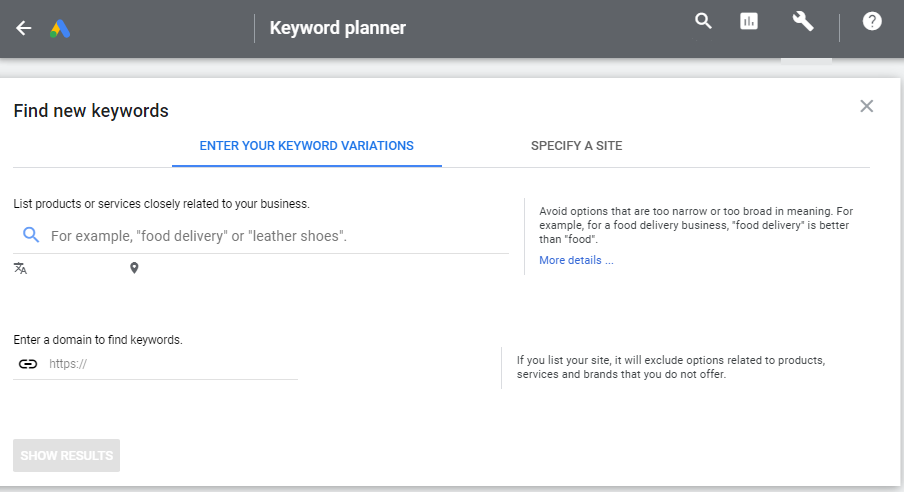
2. Google Keyword Planner
Google Keyword Planner is a powerful tool primarily designed for advertisers, but it can be incredibly useful for SEO as well. This tool allows you to discover new keywords, see how a keyword might perform, and access historical statistics. By inputting your core topics, Google Keyword Planner generates a list of related keywords along with data on average monthly searches and competition levels. This information is crucial for prioritizing which terms to target based on their potential traffic and competitiveness. Additionally, it helps you identify seasonal trends and fluctuations in search volume, allowing you to tailor your content strategy accordingly and understand search volume keyword dynamics for each month.
3. SEMrush
SEMrush is a comprehensive SEO tool that provides detailed keyword data, competitor insights, and much more. With its Keyword Magic Tool, you can explore millions of keywords and filter them based on various parameters such as search volume, keyword difficulty, and user intent. Furthermore, SEMrush allows you to analyze your competitors’ keyword plans, helping you identify opportunities to outrank them. For instance, if you notice that a competitor is ranking well for a specific keyword, you can investigate their content and backlink profile to find ways to improve your own strategy and close any obvious keyword gap.
4. Ahrefs
Ahrefs is another popular SEO tool that offers extensive keyword research capabilities. Its Keywords Explorer feature enables you to find keyword ideas, assess their search volume, and evaluate the difficulty of ranking for those keywords. Ahrefs also provides insights into the top-ranking pages for specific keywords, allowing you to analyze their content plans and backlink profiles. This competitive analysis can help you understand what it takes to rank for a particular keyword and inform your content creation process and overall seo content management.
5. Ubersuggest
Ubersuggest is a free keyword research tool that provides keyword suggestions, search volume data, and SEO difficulty scores. It’s user-friendly and ideal for beginners. You can enter a keyword or a domain to get a list of keyword ideas along with insights into how competitive those keywords are, helping you make informed decisions about which terms to target. Ubersuggest also offers content ideas based on the phrases you input, providing inspiration for your next blog post or article and making it easier to create content that meets a clear user intent.
Step 2: Analyzing Keyword Intent
Once you have your list of potential keywords, the next step is to analyze their intent. Understanding the intent behind a keyword is crucial for creating content that resonates with your audience. Here’s how to categorize keywords based on intent and ensure that every page reflects the right intent keyword and user expectations:
1. Informational Intent
Keywords with informational intent are used by users seeking knowledge or answers to questions. These keywords often start with phrases like "how to," "what is," or "tips for." For example, "how to start a blog" or "what is SEO" are common informational queries. To target these, create high-quality, informative content that addresses the questions users are asking. This type of content can take the form of blog posts, guides, infographics, or videos, providing value to your audience and establishing your authority in the industry while aligning with informational intent.
2. Commercial Intent
Commercial keywords indicate that the user is in the research phase and is considering a purchase. They often include terms like "best," "top," or "comparison." For instance, "best CRM software comparisons" suggests that the user is looking for information to help them make a purchase decision. To cater to this intent, create content that includes product comparisons, reviews, and detailed guides that help users evaluate their options. This type of content not only informs users but also positions your brand as a trusted source of information, increasing the likelihood of conversion and helping you rank keywords with strong commercial intent.
3. Transactional Intent
Transactional keywords are used by users who are ready to make a purchase. These keywords typically include words like "buy," "order," or "discount." For example, "buy iPhone 15 case" indicates a strong intent to purchase. To optimize for transactional keywords, ensure that your product pages are well-optimized, include clear calls to action, and provide an easy purchasing process. Additionally, consider incorporating user reviews and testimonials on your product pages to build trust and encourage conversions, especially for visitors arriving with clear transactional intent.
Deepening Understanding of Search Intent and Long Tail Keyword Decisions
To make keyword research truly effective, you need a deeper understanding of how intent shapes every long tail keyword decision. Long tail keyword planning focuses on more specific phrases that reflect clear intent, such as "how to find a long tail keyword for local home cleaning services" or "best long tail keyword for b2b software pricing." Each long tail keyword usually has lower search volume but higher conversion potential because the intent is sharply defined.
When you build a keyword list, segment each long tail keyword by informational intent, commercial intent, or transactional intent. This segmentation helps you decide how to create content that answers the exact questions behind each long tail keyword and how to link related pages so that user intent and search engines both see a clear structure. A good approach is to map every long tail keyword to a specific piece of seo content and to define which search intents that page will cover.
Different search intents often require different formats. An informational long tail keyword may perform better with a detailed article, video, or step-by-step guide, while a commercial long tail keyword may need a comparison table, review, or case overview. For transactional long tail keyword phrases, concise product pages with clear pricing, simple forms, and visible trust signals usually work best. Thinking in terms of long tail keyword plus intent keeps your planning grounded in real customer questions rather than abstract assumptions.
As you review data from google search console and other seo tools, check how each long tail keyword actually performs. Look at which pages attract visitors for that long tail keyword, how people click through from serp snippets, and whether the on-page content meets the implied intent. This ongoing understanding allows you to refine your keyword research, update existing content, and add new pages where there are high-value gaps around search intents that competitors ignore.
Working With Long Tail Queries in Practice
From a practical standpoint, you can design a repeatable process around long tail keyword discovery and intent validation. Start by exporting search queries from google search console, then filter for phrases with clear question words or strong modifiers that signal intent. Many of these will be long tail keyword opportunities that never appeared in your initial keyword research tools reports. Group each long tail keyword by topic, note the dominant intent, and decide whether to build a new page or expand an existing article.
Keyword research tools, including google keyword planner, Ahrefs, SEMrush, and Ubersuggest, also show tail keywords and approximate search volume keyword metrics. Combine that external data with your own performance numbers to evaluate which long tail keyword options are realistic for your domain authority and budget. Often, it is more efficient to focus on a cluster where several closely related long tail keyword phrases share the same intent and can be addressed in a single, comprehensive resource.
To keep the process manageable, document the long tail keyword clusters, their primary intent, and the page type you will build. For example, one cluster might include a long tail keyword focused on "how to choose accounting software for freelancers," a closely related long tail keyword about "pricing of accounting software for one-person business," and another long tail keyword around "best accounting software for small agencies." All three share similar informational and commercial intents, so one in-depth guide can address all of them while still treating each long tail keyword explicitly in headings, body text, and internal linking.
Over time, this process will uncover patterns in search intents across your niche. You will see which long tail keyword types drive more qualified visitors, which long tail keyword phrases tend to convert, and which long tail keyword groups require more supporting content. This continuous learning loop strengthens your understanding of user intent and supports better long term planning for seo content, product positioning, and even future services.
Step 3: Organizing Your Keywords
Once you have categorized your keywords based on intent, it’s time to organize them effectively. Keyword clustering is a strategy that involves grouping your keywords into related themes or topics. This not only helps you create a more organized content strategy but also improves your chances of ranking for multiple terms with a single piece of content.
Here’s how to effectively cluster your keywords:
- Identify Core Topics: Start by identifying core topics that align with your business objectives and audience needs. Each core topic will serve as the foundation for your keyword clusters. For instance, if you’re in the fitness industry, core topics could include "nutrition," "workout routines," and "wellness." By focusing on these core areas, you can ensure that your content remains relevant and targeted.
- Group Related Keywords: For each core topic, group related keywords together. For example, if your core topic is "nutrition," related terms might include "healthy meal plans," "superfoods," and "nutritional supplements." This clustering helps you create content that comprehensively covers each topic, increasing the likelihood of ranking for various related search terms and matching several search intents from a single hub.
- Create Content Hubs: Consider creating content hubs or pillar pages that cover your core topics in-depth. These pages can link to related articles or blog posts, improving your site's internal linking structure and enhancing user experience. A well-structured content hub not only boosts SEO but also keeps visitors on your site for a long term relationship, increasing the chances of conversions. For instance, a pillar page on "Nutrition" can link to in-depth articles on specific diets, meal prep ideas, and nutritional science, providing a rich resource for your audience that supports multiple user intents.
As you build these hubs, decide how each long tail keyword will be assigned. Some long tail keyword phrases may sit directly on the pillar page, while others work better on supporting articles. Map each long tail keyword to an exact URL, define the main intent, and document how internal links will guide visitors from general information to specific answers and finally to transactional options. This structured approach ensures your long tail keyword targeting remains consistent even as new search terms and intents appear in your data.
Step 4: Developing a Content Strategy
With your keywords organized into clusters, you can now develop a content strategy that aligns with your SEO goals. Here are some ideas for creating an content strategy that integrates long tail keyword planning, user intent, and clear measurement:
1. Create a Content Calendar
Planning your content ahead of time is essential for consistency and organization. A content calendar helps you outline what topics you will cover, when you will publish them, and which you will target. This proactive approach ensures that your content remains relevant and timely, allowing you to capitalize on trending topics and seasonal opportunities. For example, if you know that January sees a spike in fitness-related searches, you can plan to publish content on New Year’s resolutions or workout plans during that month and assign at least one long tail keyword and clear intent to each article.
2. Diversify Content Formats
Different audience segments prefer different content formats. Consider diversifying your content by incorporating blog posts, videos, podcasts, infographics, and webinars. For example, a blog post on "10 Healthy Breakfast Ideas" could be accompanied by a video demonstrating how to prepare those meals. This not only caters to various preferences but also enhances user engagement and shareability. By offering multiple formats, you can reach a wider audience and provide value in ways that resonate with different users while serving informational intent, commercial intent, and even navigational queries.
3. Optimize for SEO
Ensure that each piece of content is optimized for search engines. This includes using your target keywords naturally within the content, optimizing meta titles and descriptions, using header tags effectively, and including alt text for images. Additionally, focus on improving your website's loading speed and mobile-friendliness, as these factors significantly impact user experience and SEO rankings. Tools like Google PageSpeed Insights can help you identify areas for improvement in your site’s performance, while google search console highlights indexability issues, search terms, and how visitors interact with your ranking pages.
4. Promote Your Content
Creating great content is just the first step; you also need to promote it effectively. Utilize social media platforms, email marketing, and online communities to share your content and drive traffic to your website. Collaborating with influencers or industry experts can also amplify your reach and credibility. Consider using paid advertising to boost your most valuable content and attract new audiences. Social media ads, Google Ads, and sponsored posts can help you target specific demographics and increase visibility, especially around high-value long tail keyword campaigns with clear transactional intent.
5. Measure and Analyze Performance
Regularly monitor the performance of your content to understand what works and what doesn’t. Use tools like Google Analytics to track metrics such as page views, bounce rates, and conversion rates. This data will help you identify successful approaches and areas for improvement. Adjust your content strategy based on these insights to continually refine your approach and achieve better results. For instance, if you notice that certain topics generate more engagement, consider creating more content in that area and assigning additional long tail keyword variations with similar intents.
When you review performance, look beyond simple traffic. Evaluate how each long tail keyword contributes to leads, sales, or other business goals. A long tail keyword that drives fewer visits but converts strongly may be more valuable than a broader term with higher volume. Over time, this performance-based view will guide how you prioritize future keyword research, which intents you emphasize, and how you allocate resources across different channels.
Step 5: Staying Updated with SEO Trends
The digital landscape is constantly evolving, and staying updated with the latest SEO trends is crucial for maintaining your competitive edge. Here are some ways to keep you informed and ensure your keyword research remains aligned with current search engines behavior:
1. Follow Industry Blogs and Experts
Subscribe to reputable SEO blogs and follow industry experts on social media. Websites like Moz, Search Engine Journal, and Neil Patel’s blog offer valuable insights and updates on algorithm changes, best, and emerging trends. Engaging with these resources will help you stay ahead of the curve. Additionally, joining forums or online communities related to SEO can provide you with real-time insights and discussions with other professionals in the field, including how they approach long tail keyword selection and user intents.
2. Attend Webinars and Conferences
Participating in webinars and industry conferences is an excellent way to learn from experts and network with peers. These events often feature panels on the latest SEO approaches, case studies, and innovations. Engaging in discussions with other marketers can provide fresh perspectives and ideas that you can implement in your own strategy. Additionally, many conferences offer workshops where you can gain hands-on experience with new tools and techniques. Networking at these events can lead to collaborations and partnerships that enhance your content reach and overall marketing efforts.
3. Experiment and Adapt
SEO is not a static field; it requires continuous experimentation and adaptation. Be willing to test different strategies and tactics to see what resonates best with your audience. Regularly analyze your performance metrics and be prepared to pivot your approach based on the data. For instance, if you find that video content significantly boosts engagement compared to written articles, consider increasing your video production efforts. Flexibility and a willingness to embrace change are key components of long term success in SEO.
As part of this experimentation, test how different long tail keyword variations and intents perform when applied to the same topic. You might discover that one long tail keyword with strong transactional intent drives significantly higher conversion than a similar long tail keyword with broader informational intent. Document these findings, share them with your team, and refine your playbook so that future keyword research tips and decisions benefit from real-world performance data.
Conclusion
In conclusion, a well-structured keyword research and content strategy is essential for driving organic traffic and achieving your business goals. By utilizing tools like Google Keyword Planner, SEMrush, Ahrefs, and Ubersuggest, you can uncover valuable keywords that align with your audience's intent. Organizing your terms into clusters, developing a diverse content strategy, and staying updated with SEO trends will help you create high-quality, relevant content that resonates with your audience. Remember, SEO is an ongoing journey that requires patience, persistence, and a willingness to evolve with the digital landscape and with changing search intents across different platforms.
As you embark on your SEO journey, keep in mind that the ultimate goal is to provide value to your audience. By focusing on their needs and preferences, you’ll not only improve your rankings but also build a loyal following that trusts your brand. Apply clear keyword research tips, monitor how users search, and refine your approach whenever new data appears. Good luck, and may your SEO efforts yield fruitful results and a strong long term return on your digital marketing investments.
Additional Planning and Governance for Search Optimization
To support the main process described above, it is helpful to formalize governance, ownership, and review cycles for your search optimization initiatives. A clearly documented plan ensures that your team understands responsibilities, decision criteria, and expected outcomes for each phase of phrase discovery and on-page improvements.
Begin by defining clear business objectives for organic visibility: revenue growth, lead acquisition, brand awareness, or support cost reduction. Each objective should be mapped to measurable indicators such as qualified visitors, form submissions, or demo requests. Then, align these indicators with page groups, topic clusters, and priority phrases identified through earlier evaluations.
Assign ownership for different aspects of the process. For example, your marketing department can manage topic ideation and copywriting, while your technical specialists handle implementation details such as schema markup, site performance, and indexability. A dedicated coordinator can supervise documentation, ensure that updates follow a consistent standard, and maintain alignment with legal requirements such as the privacy policy and terms of service.
Workflow Checklist for Ongoing Optimization
The following checklist outlines a repeatable workflow that helps maintain quality and consistency across your entire website:
- Clarify objectives for each page or group of pages, including desired visitor actions and engagement depth.
- Review existing text and design to confirm that it matches audience expectations and reflects current positioning.
- Evaluate search data from platforms such as google search console to identify queries already driving visits to your pages.
- Compare your current visibility with that of main rivals by reviewing keywords competitors currently appear for and which results pages feature their domain.
- Prioritize topics where your site can realistically gain presence based on authority, available resources, and budget.
- Create content outlines that specify page angle, structure, and primary questions to be answered for the visitor.
- Implement internal linking so that visitors can move easily from general educational pages to detailed product service information.
- Check title tag quality, meta descriptions, and on-page hierarchy to ensure a clear, logical structure for both visitors and search engines.
- Monitor performance, gather feedback from sales or support teams, and schedule updates where engagement or conversion indicators fall below expectations.
Overview of Popular Research Platforms
Many organizations rely on several platforms in parallel to improve visibility and understand visitor behavior. The table below provides a concise overview of widely adopted options and their typical roles within a professional workflow.
| Platform | Main Purpose | Key Features |
| Google Keyword Planner | Discover phrase ideas and approximate demand levels for paid and organic campaigns through integration with google ads. | Average monthly volume estimates, competition indicators, historical trends, and export functions that support planning across large phrase sets. |
| Google Search Console | Monitor how your site appears in organic results and diagnose technical or indexing issues. | Query reports, click and impression data, coverage information, and page experience indicators that reveal where technical corrections are needed. |
| SEMrush | Competitive intelligence and holistic campaign management for digital marketing teams. | Domain-level visibility reports, rank tracking, gap identification between your site and rivals, and integrations with other marketing platforms. |
| Ahrefs | Backlink evaluation and phrase discovery blended with content performance data. | Link profile audits, ranking history, page-level traffic estimations, and tools for uncovering content opportunities. |
| Ubersuggest | Entry-level research, particularly suitable for a small business or independent creator. | Phrase suggestions, basic difficulty indicators, and topic ideas presented through an accessible interface. |
Aligning Search Efforts With User Journeys
To maximize value from your optimization program, you need a precise view of the complete user journey. A person rarely arrives at a website and converts immediately; instead, they often follow a path that includes discovery, comparison, and decision stages spread across several visits and devices.
Map this journey by outlining typical scenarios for your target audience. For each scenario, identify the questions, concerns, or objections that arise at every stage. Next, determine which pages should satisfy those concerns. For example, early-stage visitors may look for educational articles or video explainers, while later-stage visitors might need detailed product comparisons, case reviews, or implementation guides.
Ensure that your navigation, internal linking, and calls to action guide visitors logically between these stages. Clear pathways reduce friction, support engagement, and help prospective customers progress from general interest to active consideration and eventual purchase. Consistent design, clear wording, and reassuring proof elements such as testimonials and case studies strengthen this progression.
Improving On-Page Quality and Relevance
Search performance depends heavily on how well each page addresses a specific need. Beyond phrase targeting, focus on relevance, authority, and clarity:
- Relevance: Review whether each section of text directly answers the questions a visitor might have on arrival. Remove distractions that do not support the core objective of the page.
- Authority: Demonstrate expertise through clear explanations, precise terminology, references to credible studies where appropriate, and transparent descriptions of your company’s experience.
- Clarity: Maintain concise paragraphs, descriptive subheadings, and a logical progression of ideas so that the reader can scan quickly yet still understand the main message.
Visual elements such as charts, diagrams, and short clips can also clarify complex topics. When adding these elements, confirm that file sizes remain reasonable and that image attributes are filled out to support accessibility and organic discovery.
Using Data to Refine Decisions
Data from analytics platforms allow you to evaluate which initiatives deliver the highest business impact. Go beyond simple traffic counts and consider engagement depth, micro-conversions, and revenue influence. For example, track newsletter sign-ups, resource downloads, and trial activations by entry page and query group.
Segment reports by device category, location, and new versus returning visitors. These dimensions reveal whether certain pages resonate more strongly with specific audience segments. You might discover that a resource performs well on desktop but underperforms on mobile due to layout limitations, or that a particular region requires localized examples and pricing information.
Use this evidence to prioritize future improvements. Pages that already attract substantial traffic but convert poorly often represent the fastest opportunities for gains. Conversely, some high-performing pages may warrant additional promotion through email campaigns, paid media, or social platforms to extend their reach.
Collaboration Between Departments
Search initiatives are most successful when marketing, sales, product management, and customer support collaborate. Marketing teams contribute audience research and messaging; sales teams share objections and questions heard during calls; product managers provide detailed knowledge of features and roadmaps; support agents highlight recurring issues that should be addressed through educational resources.
Establish regular cross-functional meetings where these insights are shared and documented. From these sessions, create a prioritized list of topics and pages that will be updated or developed during the next planning cycle. This collaborative approach ensures that your website reflects accurate information, addresses real customer concerns, and remains aligned with evolving offerings.
Risk Management and Compliance Considerations
As organic visibility grows, more visitors will interact with your brand online, making risk management increasingly important. Ensure that your privacy policy, terms of service, and consent mechanisms comply with relevant regulations for every region in which you operate. Coordinate with legal counsel when launching new campaigns or collecting additional forms of user data.
Also consider brand safety and reputation. Monitor search terms associated with your name and products, and respond promptly to misinformation or negative coverage when appropriate. Establish guidelines for review responses, social media interactions, and crisis communication so that all public statements remain consistent with your organization’s values.
Long-Term View and Continuous Improvement
Organic visibility is built over an extended period. Results typically compound as your site accumulates authoritative pages, high-quality references from other domains, and positive user behavior signals. Maintain a realistic outlook: some initiatives may take months before their full impact on traffic and revenue becomes clear.
Create a roadmap that balances quick wins with foundational work. Quick wins might include improving page titles, enhancing internal navigation, or refreshing outdated articles. Foundational work could involve structural changes, large-scale content development projects, or investments in advanced software for tracking and management.
By committing to continuous refinement, disciplined measurement, and cross-functional collaboration, your organization can transform search visibility into a sustainable source of qualified visitors and long-term growth.
Labrika’s Role in Scalable Keyword Management
For organizations managing a large number of pages, manual work quickly becomes inefficient. Labrika is designed to automate critical steps in this process and to provide structured guidance for teams that need consistent, repeatable execution across long tail portfolios and complex sites.
After you assemble a preliminary keyword list, Labrika allows you to upload or enter that information and automatically evaluate how well existing pages match each phrase. The system highlights where your website already performs adequately, where there is clear potential, and where new assets are required. This helps teams avoid duplicate effort and focus on high-impact opportunities.
The platform also checks on-page factors such as title tag relevance, heading structure, text length, and internal linking. For each analyzed page, you receive actionable recommendations that show precisely where alignment with the selected keyword can be improved. Instead of relying on general suggestions, your team sees a prioritized set of changes based on concrete data.
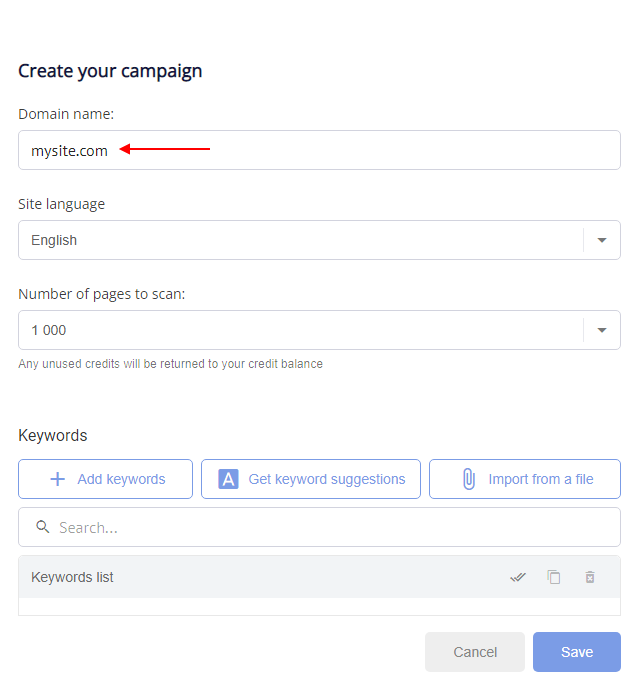
To automatically select queries for your site on the Labrika service, follow these steps:
Register on the service's main page by specifying your e-mail in the registration window.
On the "Adding a project" page that opens, specify the site address in the "General Settings" section.
Go to the "Keywords" section and click on the «Get keyword suggestion» button. Labrika will provide you with a list of search requests to be considered for promotion. You can select the ones you need by clicking on the "+" icon next to them. Or add all the suggested phrases at once by clicking the "Add all keywords" button.
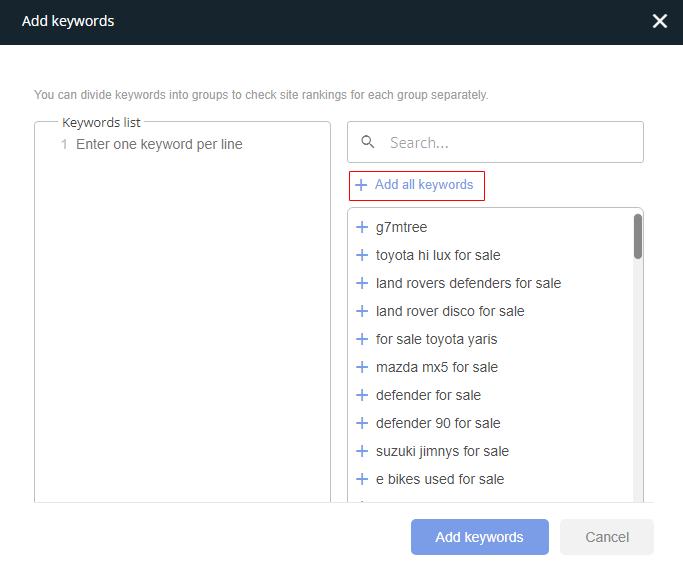
You can also enter and use keywords collected in other ways for analysis. To do this, in the "Keywords" section, click the "Add keywords" button and make a list of them in the window that opens. To save the added phrases, click the "Add queries" button at the bottom of the window.
Then, in the "Search engines" section, you need to select a search engine and a region for analysis.
After saving the settings, you can immediately run a complete site analysis.
You can view the keyword analysis results in the "Keyword Table" section. It will show the main characteristics of the keywords selected and added in the settings.
Integrating Labrika With Existing SEO Processes
Labrika fits naturally into established workflows used by agencies, in-house departments, and smaller companies. Many organizations already depend on a combination of google keyword planner, google search console, and another keyword tool or analytics suite. Labrika does not replace those systems; instead, it consolidates findings and translates them into clear tasks for writers, editors, and technical staff.
Typical integration steps include:
- Importing or synchronizing existing keyword data from other seo tools so that all relevant phrases are available in one workspace.
- Mapping each focus keyword to a specific URL and assigning responsibility for implementation and review.
- Generating page-level reports that reveal where content should be expanded, consolidated, or retired.
- Using built-in audits to identify technical obstacles that may prevent ranking, such as crawling errors or structural issues.
Because Labrika is designed for ongoing management rather than one-time audits, it supports regular check-ins where teams can review progress, compare current standings with competitors rank patterns, and adjust the plan accordingly.
Reporting, Communication, and Stakeholder Alignment
Clear reporting is essential when multiple stakeholders are involved. Labrika provides concise dashboards that summarize visibility, traffic indicators, and page quality metrics in a format suitable for management reviews and board updates. You can illustrate how specific keyword groups contribute to lead generation, revenue, or strategic objectives, which helps justify investment levels and prioritize future work.
For agencies, these same reports support transparent communication with clients. They show how recommendations have been applied, which pages have improved, and where further action is required. For internal teams, standardized reporting reduces misunderstandings between marketing, product, and executive leadership by presenting a single, shared view of performance and progress.
By combining disciplined planning, structured collaboration, and data-driven decision-making with the automation and insights provided by Labrika, organizations can manage complex keyword portfolios efficiently, strengthen their online presence, and support long-term commercial outcomes.
Operational Rollout and Team Training
To gain consistent results from your optimization program, formalize how daily work is organized and how specialists are trained. Clear procedures reduce rework, shorten onboarding for new employees, and maintain quality as the site grows.
Start by documenting a standard operating procedure for each recurring task: collecting search data, selecting page targets, preparing outlines, editing drafts, publishing, and reviewing performance. Each procedure should specify objectives, responsible roles, required systems, and acceptance criteria. Store documentation in a central location so that all contributors can consult the latest version.
Next, arrange regular internal workshops. During these sessions, experts can walk colleagues through recent projects, highlight successful experiments, and explain what did not meet expectations. Real examples from your own site help team members understand how decisions are made and how quality standards are applied.
New hires should receive a structured introduction that covers brand positioning, audience profiles, tone of voice, and compliance requirements. Provide sample documents, before-and-after page revisions, and checklists that show how theoretical concepts translate into day-to-day actions. Encourage questions and feedback so that gaps in the onboarding process are identified and corrected quickly.
Quality Assurance Framework
A rigorous quality assurance framework ensures that every new page or revision aligns with brand standards and business objectives. Establish mandatory review stages before any material is published or significantly altered.
At a minimum, include the following checkpoints:
- Editorial review: Verification of clarity, grammar, tone, and consistency with previously approved pages.
- Subject-matter review: Confirmation from product or service experts that statements are accurate, current, and aligned with roadmaps.
- Legal and compliance review: Assessment of claims, disclaimers, and data handling statements for alignment with regulatory obligations.
- Technical review: Inspection of layout, mobile responsiveness, code validity, and loading performance.
Create checklists for each stage that reviewers can follow line by line. This reduces the risk of overlooking critical details and provides a transparent record of what has been verified. When deviations from standards are detected, document the reason and corrective action, then feed those findings back into training materials.
Templates for Consistent Execution
Standardized templates accelerate production and help maintain structure across the site. They also make collaboration smoother, since every contributor understands where specific elements should appear.
Consider implementing templates for:
- Educational articles, with predefined sections for introduction, core concepts, examples, and summary points.
- Service descriptions, including problem statement, solution overview, benefits, proof elements, and call to action.
- Case narratives, covering client background, challenge, approach, and measurable outcomes.
- Landing pages for campaigns, with clear value propositions, social proof, and streamlined forms.
Templates should be flexible enough to accommodate various topics while still guiding the overall structure. Review them periodically and adjust based on performance data and reader feedback.
Documentation of Customer Insights
High-performing pages are grounded in a deep understanding of customer needs. Formalize the process for collecting and storing audience insights so that they are easy to retrieve during planning and editorial work.
Potential information sources include sales conversations, support tickets, chat transcripts, survey responses, and public reviews. Summarize recurring concerns, common objections, desired outcomes, and language that prospects use to describe their situation. Tag these findings by segment, industry, and phase of the buying cycle.
Create concise profiles that describe your principal audience groups. Each profile should include responsibilities, challenges, decision criteria, typical objections, and preferred information channels. Make these profiles available to everyone involved in planning, writing, or approving site material so that messages remain consistent and targeted.
Governance for Large and Complex Sites
As the site expands, governance becomes increasingly important. Without clear ownership and rules, different sections can diverge in tone, structure, and technical implementation, leading to confusion for visitors and inefficiencies for internal teams.
Appoint a steering group responsible for overarching decisions about structure, navigation, and priorities. This group should meet at defined intervals to review performance dashboards, upcoming product initiatives, and resource availability. Outcomes might include adjustments to the publishing roadmap, reallocation of effort between sections, or retirement of outdated segments.
Define naming conventions for sections, page types, and tracking parameters. Consistent naming simplifies reporting and reduces errors when preparing campaigns, dashboards, or experiments. Maintain a living inventory of all important pages, including their purpose, target segment, publication date, and last review date.
Experimentation and Controlled Testing
Controlled experiments enable fact-based decisions regarding layout, messaging, and calls to action. Rather than relying on opinion, you can compare alternative versions and measure which variant performs better against agreed metrics.
Begin by selecting pages where increased engagement or conversions would have a significant commercial impact. Formulate clear hypotheses, such as “shorter forms will increase completion rate among first-time visitors” or “adding a concise explainer section will reduce exit rate on mobile devices.”
Implement experiments carefully to avoid conflicting changes. Run tests for a sufficient period to gather meaningful data, taking into account traffic levels and normal fluctuations. Once a test concludes, document the outcome, update the page with the winning variant, and store key learnings in an internal knowledge base. Over time, this process builds a library of proven patterns tailored to your audience and sector.
Cross-Channel Coordination
Your website does not operate in isolation. Visitors often interact with several channels—email campaigns, paid media, social platforms, webinars, and offline events—before reaching a decision. Coordinating these channels with on-site experience enhances effectiveness and reduces friction.
Ensure that messaging and promises in external campaigns match what visitors see when they arrive on the site. If an advertisement emphasizes a particular benefit or offer, the corresponding page should highlight the same point prominently. This consistency builds trust and reduces confusion.
Share performance data across teams responsible for different channels. For example, information about topics that draw strong engagement through newsletters can inform future on-site expansions, while insights from on-site behavior can shape more precise targeting criteria for paid campaigns.
Future-Proofing Through Technical Resilience
Technical resilience underpins all other efforts. Infrastructure should support fast response times, accommodate traffic spikes, and remain stable during platform updates or migrations. Coordinate closely with hosting providers, development teams, and security specialists to maintain a robust environment.
Implement regular backup routines and recovery drills so that the team is prepared for unexpected incidents. Monitor uptime, response time, and error rates, and establish thresholds that trigger alerts when performance begins to degrade. Address underlying causes promptly rather than relying on temporary workarounds.
By investing in resilient foundations, clear governance, and disciplined execution, your organization positions itself for sustainable growth and the flexibility to adapt as markets, technology, and customer expectations evolve.
Updated on April 15, 2026